Start as a patient reader. Questions can help your child explain an idea, note the sequence and choose how to write it. Parents can support understanding and review while leaving the story ideas and sentence choices with the child.
Begin with what the child notices
Let your child examine all the pictures and read the task. Ask what they notice and which detail supports an idea. Give them time to point out clues before deciding what happens or how a person feels.
If they can only offer a few English words, let them tell the story in a comfortable language, then organise useful English keywords together. When they need support, try one smaller question that helps them continue.
Use a simple sequence
Separate the stages so your child knows what to focus on now. Adjust the length of practice to the child. One session does not have to address every grammar issue.
- Say it: tell the people, place, event and ending aloud.
- Note it: write a few keywords and put the events in order.
- Write it: let the child connect the ideas in their own sentences. Ask a small question when they get stuck.
- Read it: check the meaning first, then choose one language feature to improve. Compare expressions in a model answer when useful.
An example of questions that open up an idea
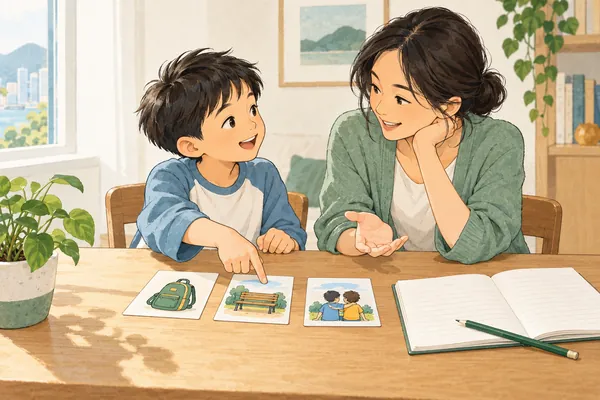
Original scene: Nina is looking for her bag at a bus stop. Her friend points towards the bench, where the bag is underneath. Ask what the people notice and what they could do next, leaving dialogue and details for the child to choose.
Try choosing a helpful question
Respond to the place where your child is stuck. Listen to what they already have, then ask one question that helps them add something. After a first draft, let them identify a clear part before you suggest one specific improvement.
Try it yourself
Your child says: “Leo dropped his water bottle, and a classmate picked it up.” They are unsure how to end the story.
- What question could help them find an ending connected to this event?
- If the child only answers “happy”, what could you ask next?
Show an explained answer
- You could ask: “What might Leo do or say after his classmate picks up the bottle?” The child can decide how to respond to the help.
- You could then ask: “What action or words could show that he is happy?” They might choose a smile, thanks or walking back to the classroom together.
- There is more than one useful question. Look for a question that develops the child’s idea while keeping the final choice theirs.