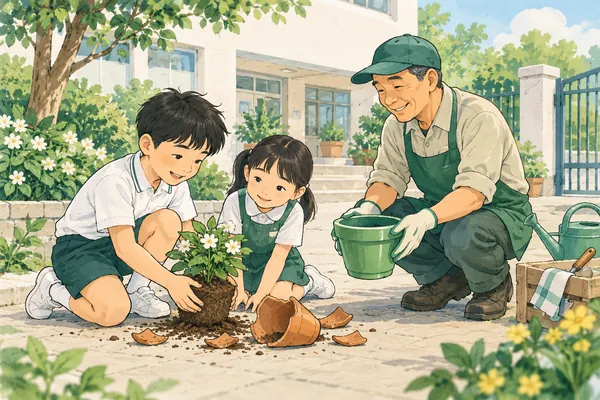
When a story is short, ask what information a reader is missing. One sentence about an action, reason or reaction often helps more than several extra adjectives. Let the child decide what belongs in their own story.
Find the missing step in the story
After reading a paragraph, ask: Do I know what happened but not why? What did the person do next? Choose one genuine gap.
The purpose of detail is to make the event clear, not to reach an arbitrary word count or insert difficult vocabulary.
Choose one of three questions
Your child can consider an action, reason or response. Ask for an oral answer first, then write one sentence and check whether it connects to the surrounding story.
- What exactly did the person do?
- Why did they do it?
- How did another person or the situation respond?
Worked example: add a reason and an action
These are original examples.

Try it: choose the most useful sentence
Identify what the original paragraph lacks.
Try it yourself
Draft: Sara missed the bus. She was worried. Which sentence adds a useful action?
- A. The bus was very, very, very big. B. Sara called her father and waited at the bus stop.
- If the next sentence says Her father came to pick her up, how does B help the ending?
Show an explained answer
- B shows what Sara did about the problem. A repeats description without moving the event forward.
- B explains why her father came: Sara had called him. This makes the sequence easier to follow.